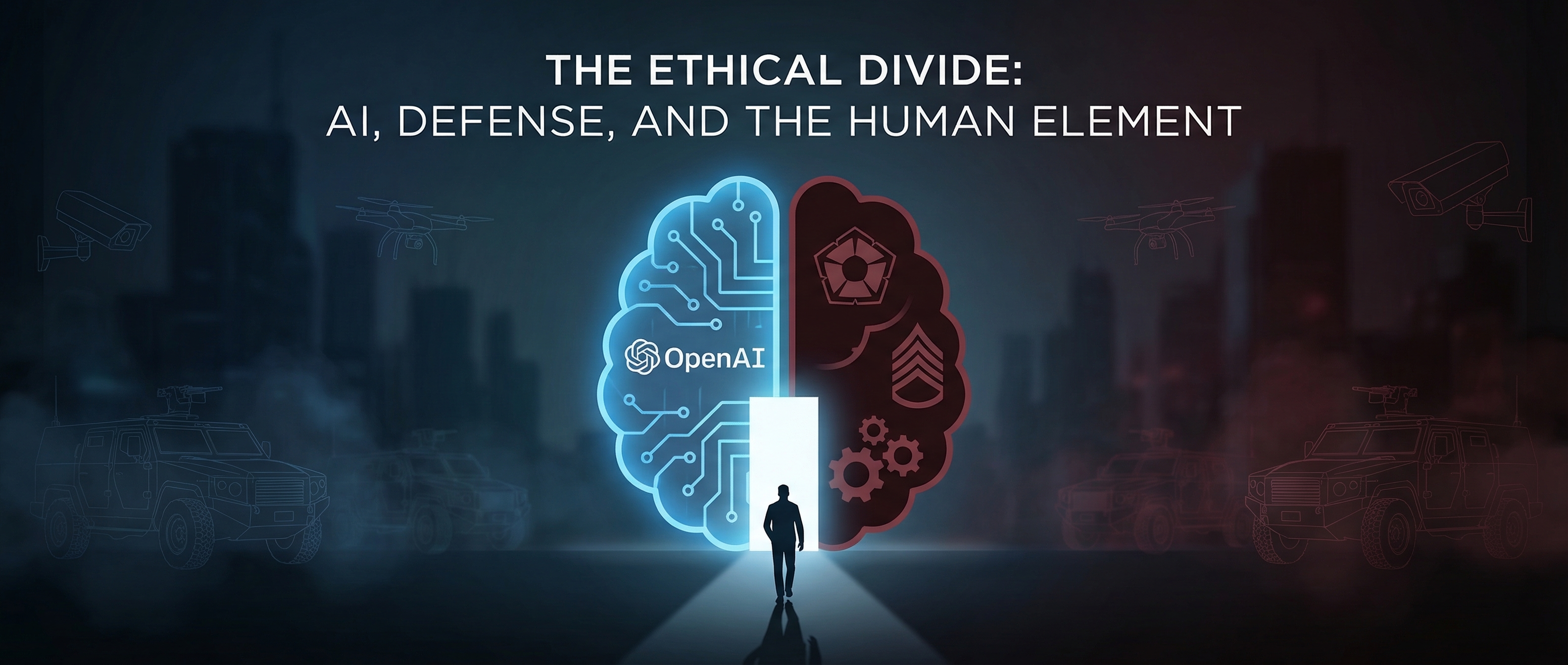
OpenAI’s robotics chief quit yesterday. The reason? She doesn’t trust the company’s new Pentagon deal.
Meanwhile, the AI system the Pentagon is trying to replace — Anthropic’s Claude — was reportedly used in strikes on Iran hours after President Trump ordered it banned.
Welcome to March 2026, where AI ethics aren’t theoretical anymore.
What Just Happened
Caitlin Kalinowski, who led OpenAI’s hardware and robotics team, announced her resignation on Saturday, March 7th. In posts on X and LinkedIn, she didn’t mince words:
“I resigned from OpenAI. I care deeply about the Robotics team and the work we built together. This wasn’t an easy call. AI has an important role in national security. But surveillance of Americans without judicial oversight and lethal autonomy without human authorization are lines that deserved more deliberation than they got.”
In a follow-up, she added:
“To be clear, my issue is that the announcement was rushed without the guardrails defined. It’s a governance concern first and foremost. These are too important for deals or announcements to be rushed.”
Kalinowski isn’t some junior employee. She joined OpenAI in November 2024 after leading Meta’s augmented reality glasses team. This is a senior leader walking away over principle.
The Pentagon Deal Everyone’s Fighting About
To understand why Kalinowski quit, you need the backstory.
The Anthropic Drama
For months, the Pentagon was negotiating with Anthropic (makers of Claude) to use their AI in classified military operations. Anthropic pushed back hard — they wanted contract language explicitly prohibiting:
- Mass domestic surveillance of Americans
- Use in fully autonomous weapons (no human in the loop)
The Pentagon said no. Defense Secretary Pete Hegseth called Anthropic’s position “a master class in arrogance and betrayal” and designated them a supply-chain risk to national security — essentially trying to blacklist them from all defense-related business.
OpenAI Steps In
Within days of the Anthropic fallout, OpenAI announced its own deal with the Pentagon. CEO Sam Altman admitted the negotiations were “definitely rushed.”
OpenAI claims the deal includes “red lines” against surveillance and autonomous weapons. But here’s the catch: instead of specific contract prohibitions like Anthropic wanted, OpenAI’s approach relies on citing existing laws and assuming the government won’t break them.
As one GWU law professor noted, this “does not give OpenAI an Anthropic-style, free-standing right to prohibit otherwise-lawful government use.”
Translation: If the government decides something is legal, OpenAI can’t stop it.
The Irony: Claude in the Iran Strikes
Here’s where it gets weird.
On February 28, 2026, the U.S. and Israel launched massive strikes on Iran — Operation Roaring Lion. The operation hit targets across 24 of Iran’s 31 provinces.
According to the Wall Street Journal, Claude was being used by CENTCOM during the operation — for intelligence assessments, target identification, and battle scenario simulation.
The same Claude that Trump had banned hours earlier.
The same company the Pentagon was trying to destroy.
As we covered in detail: Banned at Dawn, Deployed by Dusk: The U.S. Used Anthropic’s Claude in the Iran Strikes — Hours After Trump Banned It.
Why This Matters (Even If You’re Not in the Military)
1. AI Is Now Embedded in the Kill Chain
Whether you like it or not, AI is being used to:
- Process satellite imagery and intercepts at machine speed
- Identify and vet potential strike targets
- Simulate “what-if” battle scenarios
Humans still make final decisions. But AI is doing the analytical legwork that shapes those decisions.
2. The “Safety” Company Caved
OpenAI was founded with a mission to develop AI safely for humanity’s benefit. Now they’ve signed a deal with the Pentagon that their own robotics chief says lacks adequate guardrails.
The 295% surge in ChatGPT uninstalls suggests consumers noticed.
3. Employee Ethics Resignations Are Coming
Kalinowski won’t be the last. OpenAI employees already signed petitions supporting Anthropic’s position. When a company’s values shift faster than its people, exits follow.
4. The Hybrid War Is Real
The 2026 Iran conflict isn’t just missiles and drones — it’s a cyber war where AI plays a central role. From the massive Israeli cyber offensive that dropped Iran’s internet to 1% of normal, to AI-powered intelligence analysis, this is what modern warfare looks like.
What OpenAI Says
OpenAI’s official response:
“We believe our agreement with the Pentagon creates a workable path for responsible national security uses of AI while making clear our red lines: no domestic surveillance and no autonomous weapons. We recognize that people have strong views about these issues and we will continue to engage in discussion with employees, government, civil society and communities around the world.”
They also emphasized that they maintain control over their models’ safety rules and won’t give the military a version stripped of safety controls.
Whether that’s enough depends on how much you trust the enforcement mechanisms.
What You Should Know
If You Work in AI
- Ethics policies are only as good as their enforcement
- When leadership rushes major decisions, that’s a red flag
- You have leverage — AI talent is scarce, and walking away sends a message
If You Use AI Products
- Understand who your AI provider works with
- Consumer backlash matters (see: ChatGPT uninstalls)
- Privacy and surveillance concerns aren’t paranoid — they’re practical
If You Care About AI Governance
- Contract language matters less than enforcement mechanisms
- “Citing existing laws” isn’t the same as explicit prohibitions
- The gap between ban and phase-out creates accountability gray zones
The Bigger Picture
We’re watching a real-time experiment in AI ethics. Not theoretical case studies — actual resignations, actual strikes, actual policy fights.
Anthropic said “no” to terms they found unacceptable and got designated a national security threat.
OpenAI said “yes” with softer guardrails and won the contract — but lost their robotics chief and face serious questions about their values.
Claude is still being used in active military operations while its company fights a government blacklist in court.
And somewhere in between all of this, AI is being deployed in ways that will shape warfare for decades to come.
The deliberation Kalinowski wanted? It’s happening now. Just not in boardrooms — in real-world consequences.
Related Reading:
- The Cyber War in the Shadows: How the 2026 Iran–Israel–U.S. Conflict Is Reshaping the Middle East’s Digital Battlefield
- Banned at Dawn, Deployed by Dusk: The U.S. Used Anthropic’s Claude in the Iran Strikes — Hours After Trump Banned It
- Operation Roaring Lion: The Cyberattack That Rewrote the Rules of Modern Warfare
Have thoughts on AI ethics in warfare? Drop them in the comments or hit us up on Twitter.